
RANDOM

one button, 4 billion ideas
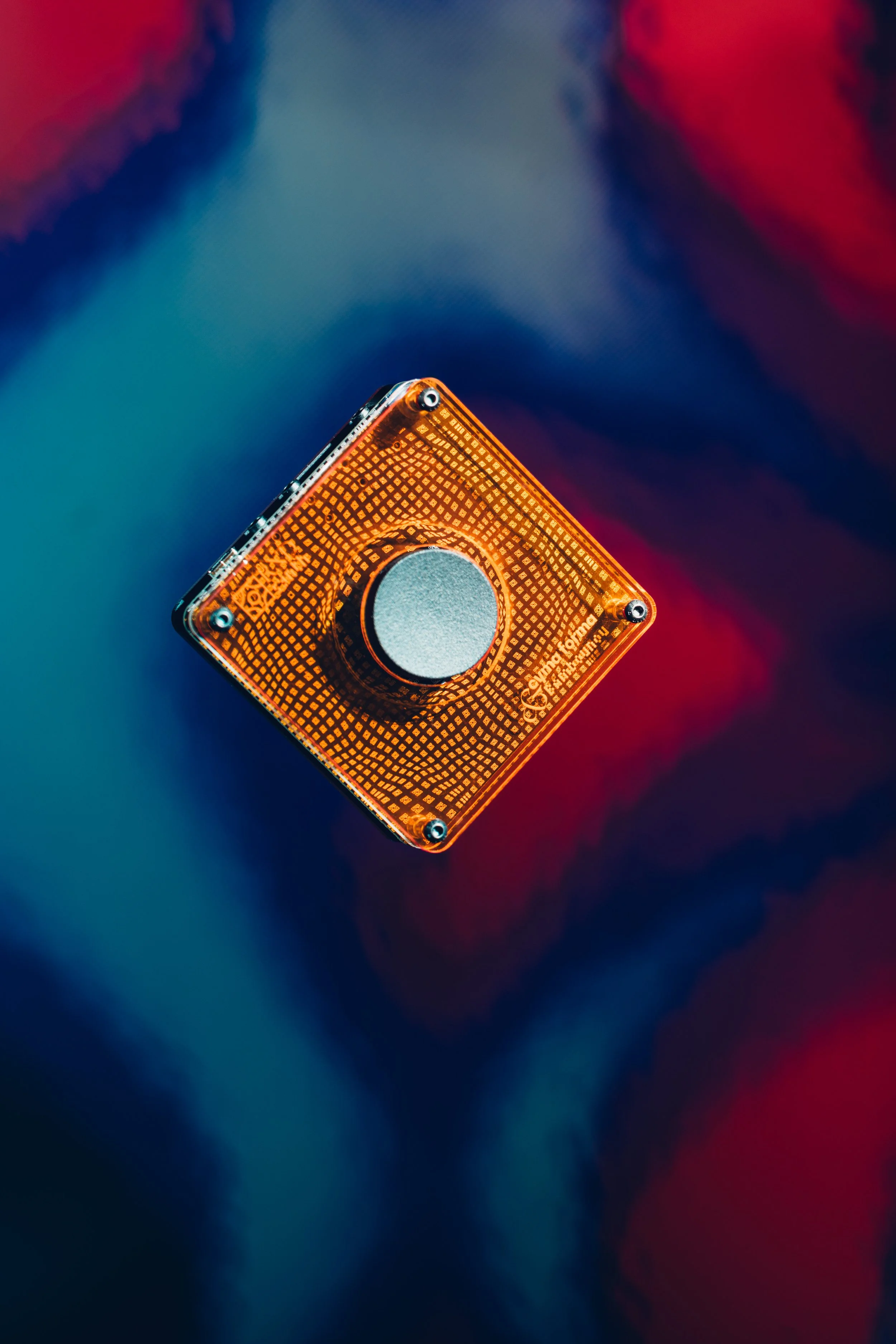
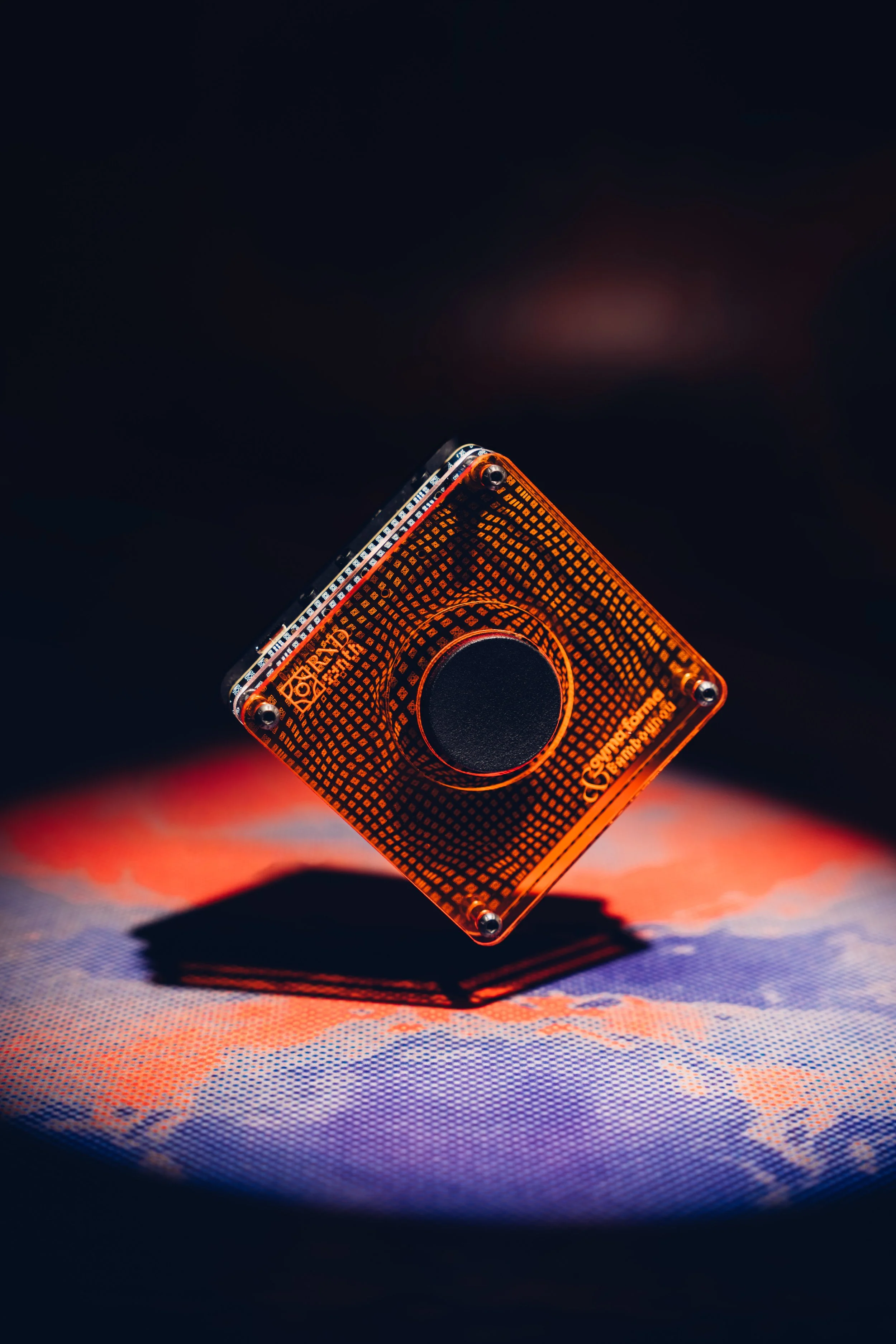
RND synth is a collaboration between cyma forma and french artist Bambounou, built around a single idea: stop playing, start listening.
each musical idea is made of up to four instruments that can live together.
each one draws from one of eight synthesis engines and runs its own random musical sequence.
every time the button is pressed, all of the many parameters across all features are set to random values, giving birth to a synthesized idea that only exists until the next press of the button.
not presets, not samples, but an infinite source of sounds.
Trade control for inspiration
press the button. a sound arrives, fully formed, unrepeatable, unchosen. press again. it's gone, forever. something new exists in its place.
press the button. a sound arrives, fully formed, unrepeatable, unchosen. press again. it's gone, forever. something new exists in its place.
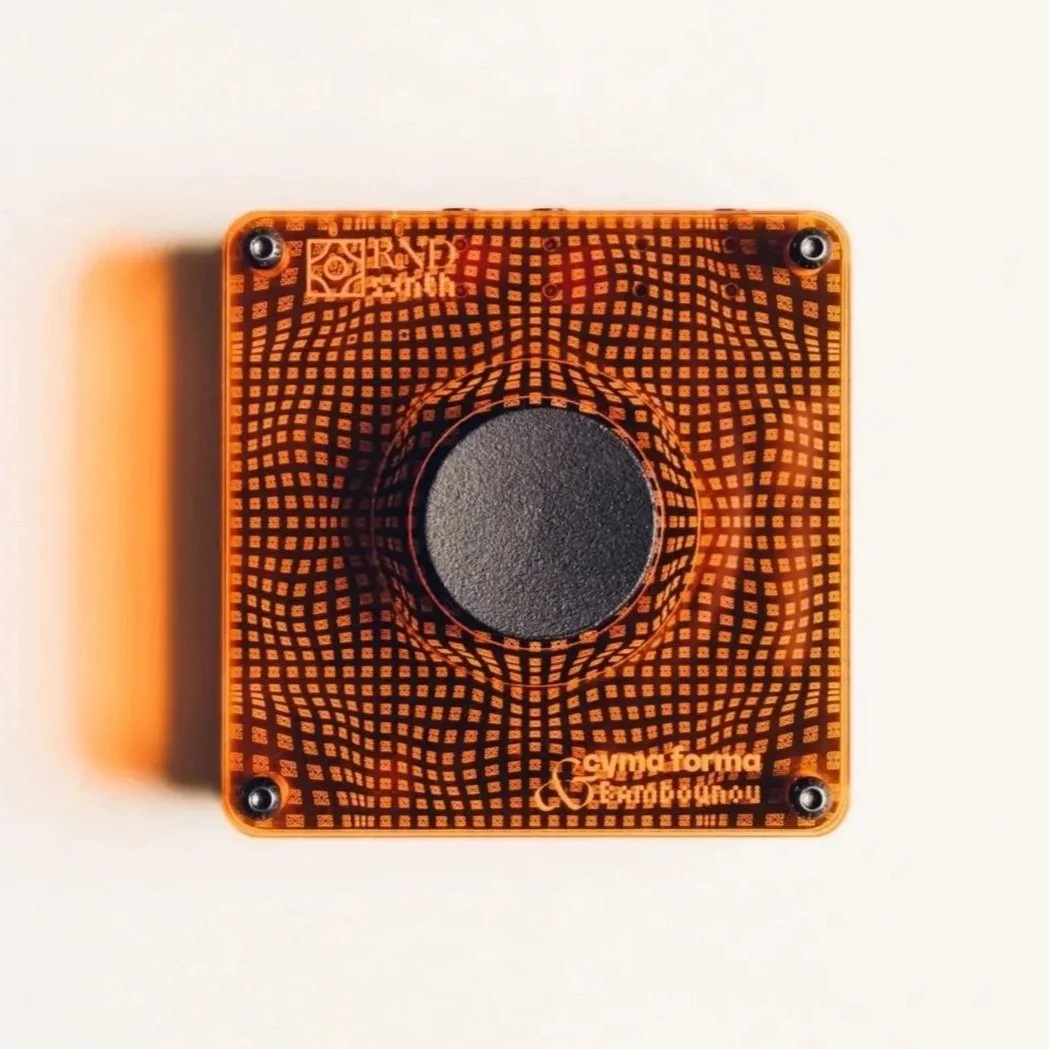
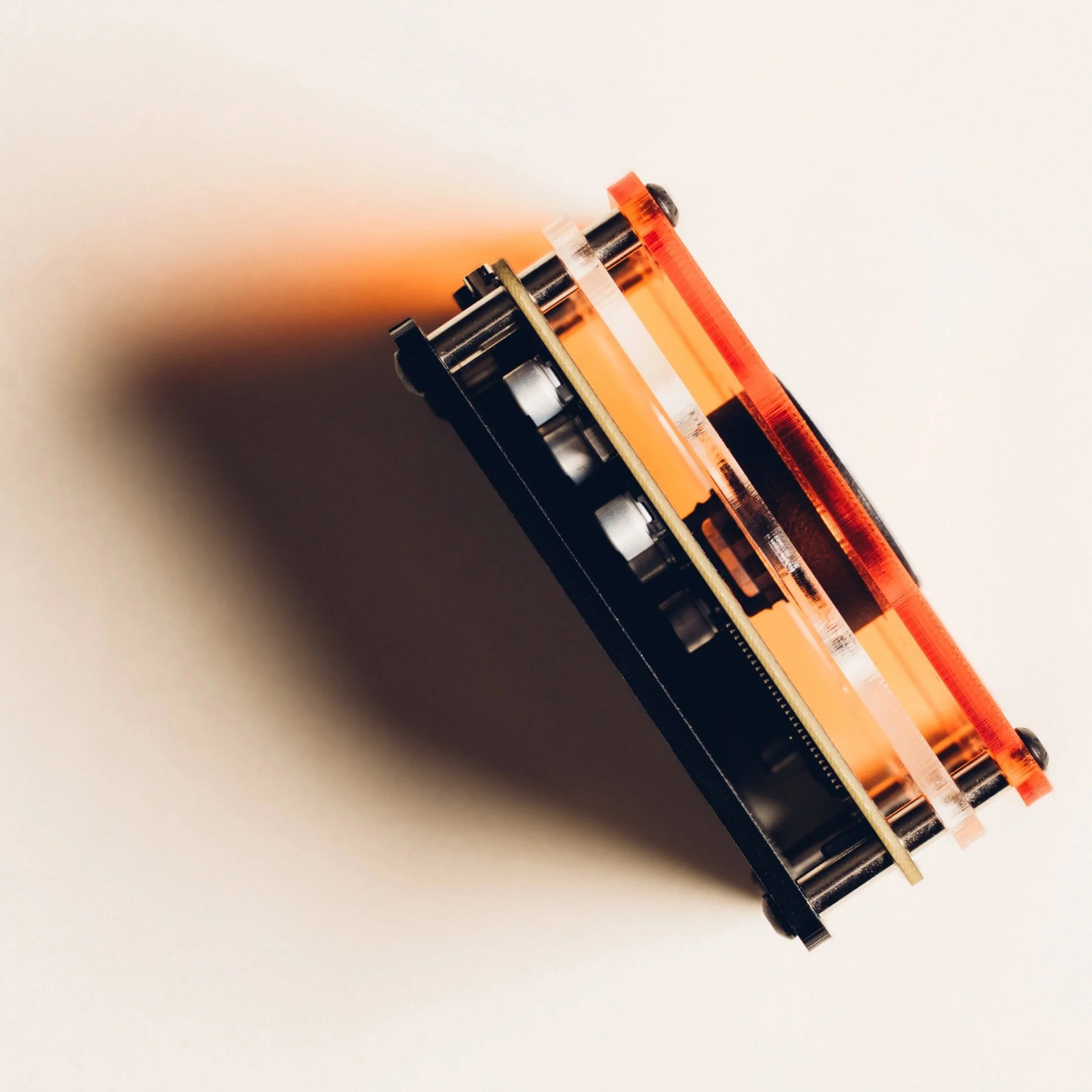
8 synthesis engines: subtractive, fm, acid, noise, speech, karplus-strong, supersaw, additive
4 simultaneous instruments per patch, individually mixable
4 simultaneous euclidean sequences, playable over MIDI (see below)
20 scales
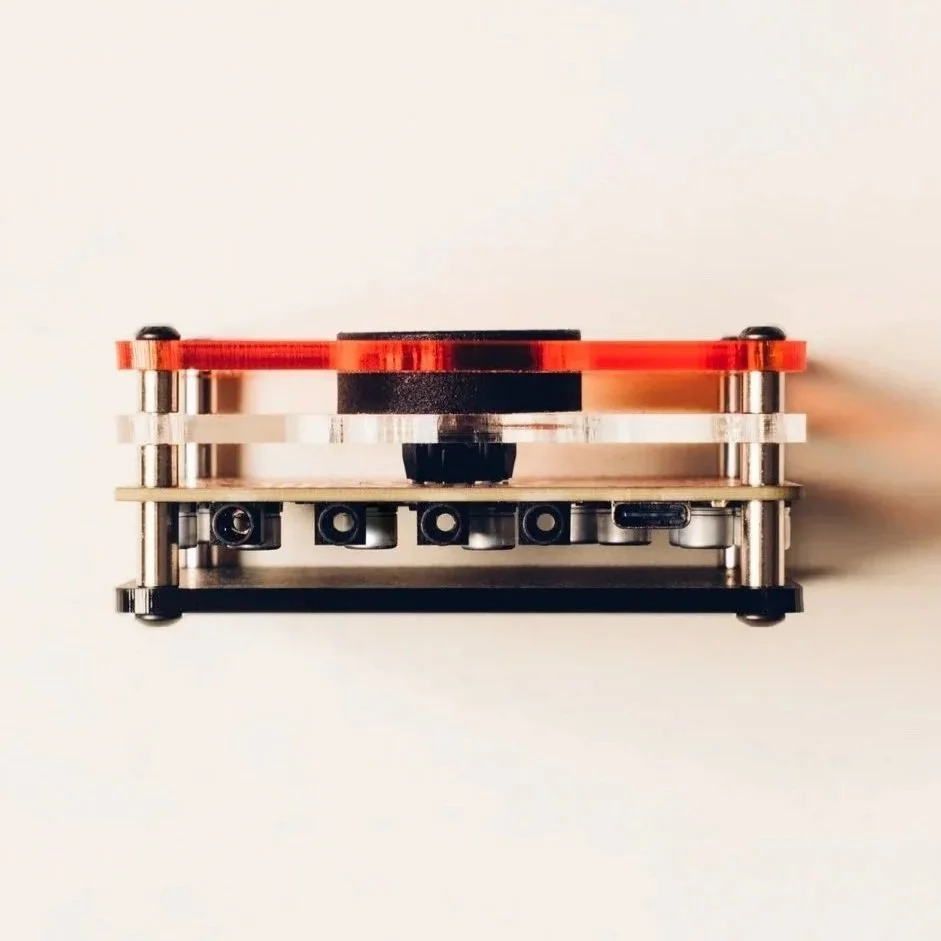
4-track audio output over usb-c (one track per instrument, pre-reverb)
4-channel MIDI in: play RND synth with keyboards or sequencers (usb-c + trs mini jack type a)
4-channel MIDI out: send 4 random sequences to other instruments (usb-c)
9 MIDI modes: see below.
MIDI clock in (usb-c + trs mini jack)
analog sync in and out (2 ts mini jack)
stereo mix out (trs mini jack / post-reverb)
power 5V, 1A (usb-c)
4 294 967 296 sounds (random seeds)
more to come
That’s a lot of features
for a single button
midi channel 1 — global control
- tonic note selection / global transpose - the chosen tonic note is kept when you press the button
- master volume (midi cc 7)
- reverb level of all tracks (midi cc 91)
- scale selection (midi cc 9)
- 0–6: major
- 7–12: minor
- 13–19: harmonic minor
- 20–25: blues
- 26–31: major pentatonic
- 32–38: minor pentatonic
- 39–44: dorian
- 45–51: phrygian
- 52–57: lydian
- 58–63: mixolydian
- 64–70: locrian
- 71–76: whole tone
- 77–83: double harmonic
- 84–89: hungarian minor
- 90–95: phrygian dominant
- 96–102: hirajoshi
- 103–108: in sen
- 109–115: prometheus
- 116–121: octatonic
- 122–127: persian
midi channels 2 to 5 — play one track, let the others run
send notes to midi channel 2, 3, 4, or 5 to take over track 1, 2, 3, or 4 respectively.
the random sequence on that track stops, and you play it yourself — with a midi keyboard, a sequencer, or any midi source. the three other tracks keep playing their random sequences.
midi cc 7 controls the volume of the track you are playing.
midi cc 91 controls the level of reverb of the track you are playing.
midi channels 6 to 9 — play one track solo
send notes to midi channel 6, 7, 8, or 9 to play track 1, 2, 3, or 4, respectively, in solo mode.
the random sequences on all four tracks are stopped. only the track you are sending midi notes to is heard.
midi cc 7 controls the volume of the track you are playing.
midi cc 91 controls the level of reverb of the track you are playing.
use midi channels 6 to 9 at the same time to control all tracks! when you do, pressing the button will only change timbers.
a few notes:
- not every patch uses all four tracks — some channels may be inactive depending on what RND synth generates.
- each instrument responds to note, velocity, pitchbend, and aftertouch
- each instrument can be polyphonic (4-voice), or not, randomly